

What Needs Marking
On ritual, midlife, laundry, and becoming your own priest

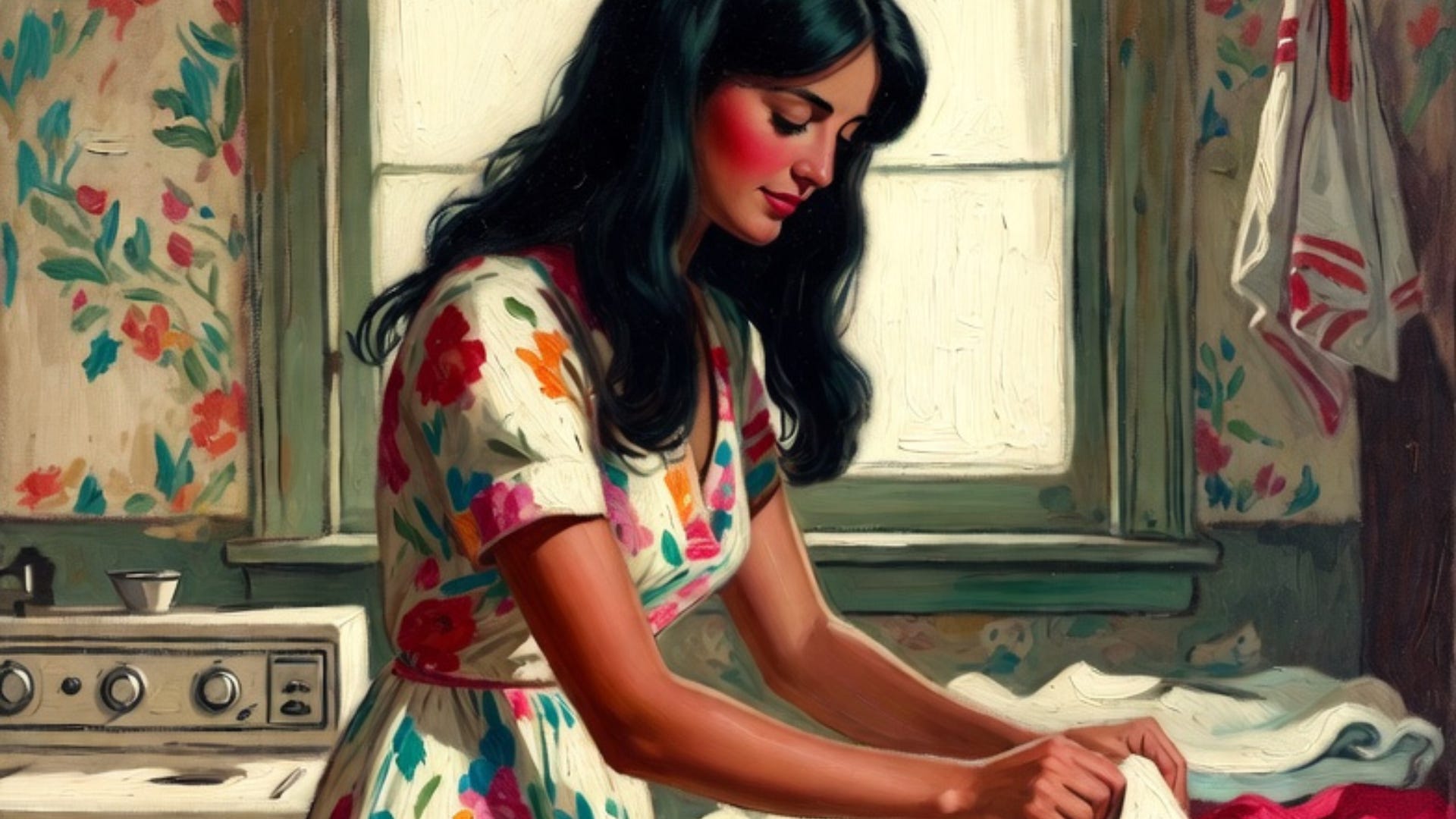
“They are what make one day different from other days, one hour from other hours.”
Antoine de Saint-Exupéry
There’s a moss-green velvet pouch in my bedside drawer that holds nothing useful. No spare key or running away money. No sensible little packet of plasters. Inside it is a sprig of rosemary from a garden that no longer belongs to me, a few small stones from a walk I took the morning after everything changed, and a scrap of paper that says, in the darling authority of my son’s slightly unhinged handwriting, you really are rock’n’roll, Mum.
It lives among the usual bedside debris: lip balm, a book I keep meaning to finish, old receipts, the peculiar shrapnel of being a woman who has lived through too much and still insists on keeping a drawer-full of tweezers, lest the un-arched brow be the death of her. Before I’m properly awake, before the day has started its nonsense, I open the drawer and see it and something inside me settles.
That’s a ritual. A small one, certainly. Private enough to feel slightly ridiculous when described out loud. Necessary enough that I keep doing it. It says: I am still here. I have crossed things. Here, here is the evidence…
Perhaps that is where all real ritual begins. Not with robes or bells or some elaborate performance under a theatrical moon, but with a woman opening a drawer and remembering herself before the world gets in? A little green pouch. A relic. A domestic reliquary, if you must.
Anthropologists have spent a long time trying to understand why human beings, across cultures and centuries, keep making ceremonies out of thresholds: birth, blood, marriage, death, harvest, departure, return, the moment a person becomes someone else even if no one has moved house, signed a form, cut their hair, or changed their name. Arnold van Gennep described rites of passage as a movement out of ordinary life, into the charged in-between, and then back into the world changed. Victor Turner gave us liminality, that threshold state where you are no longer who you were, but not yet who you’ll become.
“We had the experience but missed the meaning.”
T. S. Eliot
Ritual matters because it keeps that hallway between selves open long enough for the soul to catch up. Without it, we stumble from one life into another with no witness, no language, no cake afterwards. We change, but we don’t always become changed. The mind can keep pretending, but the body is always harder to fool.
It knows when something has happened. It knows when a house has stopped being home, when love has gone sour in the walls. When the child no longer needs you in the way your whole self had grown around. (Oh how I know that feeling). It knows when the body you once believed you were in charge of has begun issuing its own strange, hormonal decrees from the basement. The body keeps its own weather. the body, as the best-selling book assures us, keeps the score.
That’s why ritual needs action. Thinking about an ending is not the same as marking it. Journaling about a beginning is not the same as stepping into it. The therapist’s couch has its place, and I know that from extensive experience, but sometimes the body has to be involved in the understanding? Something must be touched, washed, carried to the garden in the dark, lit, buried, folded away, spoken over, cooked slowly, given back to earth, or taken out of the drawer after years of not being looked at. Ritual gives the body a sentence it can understand. It says: this is over. This matters. You may come back from the threshold, but you won’t come back unchanged.
Every real ritual has bones underneath whatever culture dressed it in. First, ordinary time is interrupted. A signal is given. The room changes mood. The day is no longer merely the day. That’s why weddings rarely happen in the middle of someone doing the hoovering! Why vigils last through the night. Why people light candles before writing, praying, grieving, confessing, or making decisions they already know will change everything.
Something says: pay different attention now.
Then comes the threshold act itself, the thing done that can’t be entirely undone. Vows spoken. Cloth torn. Hair cut. Wine poured into earth. A photograph burned over a bowl in the sink because you are practical, and also because you don’t want to set fire to the curtains. Sometimes there is discomfort: fasting, walking, keeping watch, staying awake when the body wants escape. It isn’t because suffering is holy. It’s because the body needs convincing. The mind can manufacture a thousand evasions before breakfast. But the body won’t believe it until something is felt somewhere between the senses.
Afterwards there is a return. Food. Witness. A new name. A clean dress. The party after the funeral. The birthday cake. The cup of tea after bad news. Someone puts a plate in your hand and says eat, love, and that too is ritual. You’re brought back to ordinary time, but fed. Recognised. No longer floating loose in whatever happened. Miss that final movement and you stay haunted. Miss the threshold act and nothing actually lands. Miss the opening and the whole thing feels like theatre, and not even good theatre, more like an am-dram production with one committed, fiesty woman carrying the entire cast…
“Ritual is poetry in action.”
Rabbi Hayim Herring
Modern life though is full of unmarked crossings. Birthdays arrive and are ignored because getting old. Deaths are marked with paperwork, casseroles, admin, and the bewildering decision of whether the person who has died would have wanted lilies. Divorce is handled by legal letters and the sudden division of teaspoons. Menopause comes with leaflets, jokes, prescriptions, rage, sleep disturbance, and a cultural instruction to keep looking sexy if at all possible.
Shame on you for not caring enough to try, the whole world tsk’s.
There is no ceremony for the last time your child reaches for your hand in public. No ceremony for the morning you understand that the old version of ambition has rotted from the inside. No ceremony for the body that refuses to carry the story you wrote for it at thirty-two. No ceremony for the friendship that thinned until it became a ghost. No ceremony for the day you finally stop being available for every emotional spillage just because you’re good with a cloth.
We are expected to absorb these changes privately. Maybe buy a journal? Or listen to a life affirming podcast. Or just get on with it, for Gawds sake!! But the body doesn’t get on with it, rather it stores the unmarked thing under the ribs, in the jaw, in the hip that aches every time you have to sit next to someone you have spiritually outgrown, in the shoulders lifted against an old danger that no longer lives in the room but still seems to have a key. Nothing disappears simply because we were too busy to kneel beside it.
Too many of us have lost our ritual literacy. Or perhaps it was taken from us - mocked, flattened, made too narrow, turned into product, and then sold back in clean fonts with a workbook, a bonus audio and a shouty Zoom call. The old forms weren’t always kind, and we shouldn’t get sentimental and imagine the women before us wandering about in harmonious sisterhood, blessing each other between loaves, because it is true that while some were held, many were trapped by church, family, class, opinion, hunger, and the small local tyrannies that can make a woman’s life feel too much like a locked cupboard.
Still, they had markers that we have lost. The church year moved time through their bodies whether they believed or not. Seasons had specific and necessary tasks. Birth and death were not usually outsourced to strangers in wipe-clean rooms. Women gathered because life required it, not because someone had branded gathering as a feminine leadership container and charged accordingly. Now many of us live with unprecedented freedom and almost no ceremony for what that freedom costs.
Midlife, especially, is thick with crossings no one names. The last school run. The first hot flush. The morning you realise you are no longer willing to be pleasant at the expense of your soul. The day you understand that being desired and being seen were never the same thing. The first time invisibility feels less like erasure and more like a cloak. The moment you stop mistaking endurance for love.
There should be bells for this! There should be women in doorways sprinkling flowers in our hair! There should be bread broken, songs sung badly, old names dropped into flame, and someone asking, with absolute seriousness: what have you survived, and what are you no longer willing to carry?
But no-one asks, Damnit! So those of who need or want to bear witness to our own lives have to invent ritual, and apply meaning of our own, because the alternative is to drift through transformations that deserved witness and wonder why, years later, we still feel strangely unfinished.
Let’s consider then, aesthetic sensibility as philosophy, because it matters here. Not aesthetics as prettifying. Not “make your suffering photogenic and place it next to a pear.” I mean the deeper instinct: the dried herbs, the stone floor, the preserving jars, the old table with knife marks in it, the slippers warming by the fire, the jug with one crack, the wool blanket folded at the end of the bed like a promise you can lie under. All of it…
Cottagecore as aesthetic and more pertinently as a way of life, speaks to women because it gives shape to a hunger that had been sneered at. A hunger for texture. For seasonality. For a life where objects are gathered with intention rather than delivered by a man in a van while you’re half dressed and ashamed of your recycling. And burrowcore, cottagecore’s more introverted cousin, has its own quiet genius: low lamps, hobbit instincts, a room that says the world may continue its nonsense outside, but in here the soup is on and the books know your name. The burrow is not escapism when built honestly. It is protected space. It is the place where the performed self is allowed to unfurl and there is so much inside us that we have been keeping too tight in the bud.
Both sensibilities understand something our culture keeps forgetting: objects aren’t neutral. Small repeated acts accumulate. A room can hold you or insult you. A cup can become a bell. A drawer can become an altar if the right grief is placed inside it. Because real ritual is made from real things and true stories, which is where most people go wrong. They go shopping. Trying to turn the commercial into the spiritual. So they buy the candle, the bowl, the feather, the velvet cloth, the special deck, the ethically ambiguous bundle of something dried and imported. And suddenly the ritual looks atmospheric but has no blood in it. It lacks the meaning, we recognise in the objects that tell our stories.
So don’t start looking for the objects that will contain the ritual in TK Maxx. Start with your actual things: the dress you wore when you said yes to something your body had already refused. The keys to a house you were glad to leave but sometimes still reach for in the dark. The rejection letter from the door you thought would save you. The perfume you wore in the year you abandoned yourself. The manuscript of the book you’ve stopped writing because it was dragging too much from the wound and not enough from the truth. The cardigan from the week you kept saying you were fine and everyone believed you because you are, unfortunately, quite convincing.
These things are already charged. They don’t need to be made mystical. They have been waiting, quietly and rather accusingly, for you to do something honest with them. A thing kept without meaning becomes clutter. A thing handled with intention becomes witness, so the patina is the point. The wear shows the handling. The stain remembers the day. The crack in the cup is not romantic because it’s a crack. It is emotionally moving because something survived being broken and is still allowed in the cupboard because somehow it still matters.
You cannot buy ritual. So go instead to to the drawer you haven’t opened since the last time things changed. Go to the wardrobe, or the box under the bed. Or go to the laundry room.
Yes, the laundry room. I know. It sounds absurd. It sounds like the least holy place in the house, unless you are one of those women who has managed to make even laundry look like a Scandinavian slow-living reel. But the laundry knows. The laundry always knows.
It holds the dress from the dinner that changed the atmosphere of a marriage, the shirt worn to the appointment where you finally heard what you’d been suspecting, the cardigan you had on when something ended quietly in a room with the television still talking to itself, the pyjamas from the week you could not quite get dressed, the sheets from the bed where grief made its nest and refused to leave. We handle our lives through fabric long before we understand them in language.
Which means sorting, soaking, washing, pegging out, mending and folding aren’t neutral acts when done with attention. They are small negotiations with the evidence of living. This can be kept. This needs mending. This is stained but beloved. This no longer fits the woman I am becoming. This has served its time.
Laundry then, is a threshold ceremony in disguise. Something comes in marked by the world: sweat, food, blood, rain, perfume, sleep, hospital air, other people’s smoke, your own sorrow. It passes through water, transformation’s oldest accomplice. And it is turned, wrung, lifted, and exposed to air. Then it returns to the drawer altered. Not new. Never new again. Cleansed enough to continue.
And perhaps that is all any of us can ask after certain passages. The white linen on the line, the snap of cotton in wind, the smell of sheets dried outside in late afternoon, these things endure in paintings and poems and memory because they are genuinely beautiful and beauty isn’t incidental to ritual. Beauty gives the body courage. It says life is still worth arranging tenderly, even after the terrible awful unspeakable bad thing, even after the ordinary disappointments, the goblin-ugly days and the ones that rip your heart out. Still there is laundry. To ground you in the ordinary beauty we all need to make life worth toelrable.
So the folding, if you let it, is meditation. The putting away is a small reinstatement of order. The pile on the floor is a portrait of your actual life: what you have been doing, what you have been wearing for protection, what you can’t bring yourself to put on, what needs to be released because it belongs to a woman who no longer lives here. What does your laundry know about you that you haven’t admitted yet? What has the routine continued to manage while the ritual quietly died?
“The danger is in the acceptance of the monotonous.”
Rabbi Hayim Herring, On Being
For the neurodivergent woman, ritual can be more than meaning-making. It can be the backbone of our days. Not so much discipline, because ritual is not that, ritual is in many ways, fundamentally different. A routine says: do this or you have failed. A ritual says: do this and return to yourself. It creates bridges between states, and some of us need bridges more than others: between sleep and morning, work and home, public self and private self, being touched all day by everybody else’s needs and remembering that your body belongs to you. A candle, a song, a cup, a walk, a folded cloth, a sentence spoken aloud: these aren’t frills. They are signals to the nervous system. They say we are leaving one state now and entering another. You don’t have to drag the whole day behind you like a dead wedding dress.
This is why small daily rituals matter - because not every ritual can be a grand threshold ceremony, thank heavens. You simply can’t be in sacred time all the time. You’d become unbearable by Tuesday and start obnoxiously things like “the universe invited me” when you merely wanted another biscuit.
“Sacred time… makes possible the other time, ordinary time.”
Mircea Eliade
There are the threshold rituals, which mark significant crossings: a marriage ending, a house left, a body changed, a child grown, a grief finally named, a decision made after years of not-making it. These require preparation. They need a beginning. They need a closing. They may need witnesses. And they often need food afterwards because the body is a creature of soup and cake as much as revelation.
Then there are daily rituals, the little hinges of a deliberate life: the kettle filled before you can bring yourself to speak to anyone, the notebook opened before the screen starts shouting, the particular tea in the particular cup that means I am allowed to think now, the same morning walk taken not because you lack imagination but because sameness can is a safe container for the mind. The window opened while cooking. The song that changes cleaning from punishment into weather. The hand on the doorframe before leaving the house. The tiny pause before answering a message that has already irritated your blood.
These are not decorative habits. They are the warm infrastructure of your actual life. Burrow-magic! The peeking at my velvet pouch is one of these. It doesn’t solve anything. It doesn’t make the world kinder. It doesn’t pay a bill or heal a wound or change the fact that some gardens stop belonging to us. But it reminds me: you have crossed before. You came through. You kept what mattered.
So how do you build ritual for yourself? Part of me wants to say you don’t. Not entirely. The best ones seem to form at the edge of your life like mushrooms after rain. You notice that you always touch the same photograph before difficult phone calls. You notice that you can’t leave a house without standing in the kitchen one last time. You notice that you’ve been keeping a stone in your coat pocket for six months and somehow it has become a small, cold witness.
Meaning grows in repetition.
Still, chosen action matters. Deliberate ritual says: I am not merely being dragged through this. I am taking part in my own becoming. So begin with the question: what needs marking? Not what would make a nice ceremony. Nor what would look good written in a caption under candlelight. What transition are you actually inside that has no language? What ending has already happened but not been witnessed? What have you become without being welcomed? What have you lost that everyone else thinks you should be over by now?
Of course, not everything needs ritual. Going to the gym doesn’t need consecrating. But the first time you go after divorce might. Buying new sheets doesn’t need a ceremony. But changing the bed after someone has left and won’t be coming back probably does. Clearing a wardrobe might be one more task on your to-do list. But removing the clothes of a woman you performed for years might require something stronger than bin bags.
The test is physical. Does your stomach drop slightly when you think of it? Do your eyes sting before language arrives? Does some part of you whisper, absurdly and with great authority, oh? That’s the place.
Choose objects that already know the story. Choose a time that carries its own charge: dawn, dusk, the anniversary of the day you knew, the first morning in the new house, a full moon if that matters to you, a rainy Tuesday if that is when the truth finally stops waiting.
You need a beginning: something that tells the body ordinary time has been interrupted: a bath drawn, a cloth spread on the table, shoes removed, a candle lit, a particular route walked, the kettle boiled in silence, a door opened and closed with care.
You need an act. Not thinking. Not planning. Not spiralling beautifully in your notebook until you have made grief look like stationery. Something must happen in the world. Cut, wash, bury, burn, cook, carry, plant, pour away, walk toward, walk away from. Let the body do the sentence. The act should cost you something, though not money if you can help it. Money is often the least interesting thing we have. It should cost you the comfort of vagueness, the little narcotic of maybe, the old silky lie that you don’t really know what you know.
And then you need a return. And this is where most invented rituals fail. They open the door to the threshold and then leave you standing there in your bare feet. Close the ritual. Blow out the candle. Wash your hands. Eat something. Call someone safe. Sleep. Put the object away. Walk home by a different route. Change your clothes. Say aloud: it is done. The closing matters because it returns you to ordinary life.
But never the same ordinary again.
Some possibilities, because sometimes the imagination needs a little tickling: burn every photograph from a chapter of your life and speak one true sentence about each as it burns. Walk to a high place and tell your secret to the horizon. Write your old name on your skin in ink and wash it off while speaking the name you actually recognise, not necessarily the one on your passport, but the one that lives in the private inside. Read your own eulogy aloud to an empty chair, then write a birth notice for the woman still alive. Cook the meal that matters most to you, the real one rather than the impressive one, and eat it alone with the good dishes, no phone, no apology.
Ritual doesn’t have to be tasteful. In fact, it may be better if it isn’t entirely tasteful. A ritual that is too elegant can sometimes avoid the wound. A ritual that includes crying in slippers beside the recycling bin might be far closer to God.
The rules of invented ritual are simple, but not necessarily gentle: It must be true. It must mark something real, not something you are pretending to have finished. It must involve the body. A ritual can’t live entirely in your head. Something has to be touched, carried, cut, washed, cooked, buried, burned, worn, poured away, planted, spoken, eaten, walked toward or walked away from. It must cost you something, but not dignity. It should cost you denial. It must be witnessed by a friend, a sister, a circle, a photograph, a sentence in a notebook, the moon over the wheelie bins. Someone or something must be able to say: yes, this happened.
And it must end. That last one matters. You can’t live permanently in the threshold. Eventually someone has to make the tea.
There is always a risk, of course, that we turn even this into content. That we make the ritual beautiful before we make it true. Arranging the candle, the linen, the notebook, the bowl of pears, and forgetting to say the frightening sentence. So let this be said plainly: if it looks beautiful but lets you keep lying to yourself, it is not ritual. It is styling.
Styling has its place. I am not immune. I have been emotionally manipulated by a terracotta jug full of Baby’s Breath more than once. But ritual has to go further than atmosphere. It has to touch the wound or it’s nothing.
Here then, are some invented rituals, all of which I mean seriously, while fully acknowledging their absurdity
The Croning
For the woman entering her fifties, or any age at which she realises she is done auditioning.
Gather women who knew you in different versions of your life. Not necessarily the neat witnesses. Choose the ones who remember your earlier selves with tenderness, accuracy, or both. Ask each woman to bring an object that represents who you were when she first knew you: a photograph, a lipstick, a song written on paper, a cheap bangle, a bus ticket, a recipe, something ordinary enough to be dangerous.
Make a fire if you can. If you can’t, gather around candles and let symbolism do what logistics can’t. Each woman speaks her memory of you, not a speech, not praise, but a true remembering. You speak last. Name what you are done performing. Name what you are no longer available for. Name what you are taking into the next life.
Then feast. Wear something you would once have thought too much. Dance to music from the years you were becoming. Accept gifts. Don’t deflect them. Don’t make yourself smaller to keep the room comfortable. Go home and sleep with the window open. Let the night recognise you.
The Unmarrying
For the end of a marriage, a long love, or any bond that shaped you so deeply it needs more than paperwork to release.
Return to the place where you married, if you can. If not, choose a threshold: a bridge, a doorway, the entrance to a park where you once made a decision you didn’t understand yet. Go at dawn. Walk through the threshold backwards. Yes, backwards. Ritual is allowed to look strange. In fact, if no dog walker briefly questions your choices, you may not be trying hard enough.
Speak aloud one thing you are taking with you. Then speak one thing you are leaving behind. If you have a ring, wear it on a different finger for a month. Let the body feel the displacement. Let habit reach and find alteration. At the end of the month, remove it deliberately.
Bury it somewhere beautiful, unless it needs to be sold because life is expensive and symbolism doesn’t pay the council tax. If you sell it, use some of the money for something that marks your return to yourself: a coat, a course, a bed, a train ticket, an absurd lunch with oysters if oysters are your thing. Plant something if you buried it. Note what grows. Note what doesn’t. Let it all be story.
The Ambition Consecration
For claiming the power you’ve been apologising for, minimising, making palatable, or wrapping in a little lace napkin so nobody feels threatened by it.
Fast from apology for one day. Not from food unless that is safe and right for you. Fast from softening your sentences. Fast from making your desire smaller in case someone else feels exposed by it. Fast from the little laugh after saying something true. At the end of the day, dress as the woman you are becoming, not the acceptable version of her. Wear the earrings. Wear the boots. Wear the lipstick that makes you feel faintly dangerous.
Write your current biography, the one you use when you are trying not to frighten people. Burn it safely. Then write the real one, the audacious one, the one that makes your hands sweat. Read it aloud. Frame it. Put it somewhere you will have to face it. Then take yourself to dinner somewhere that feels slightly beyond you. Order what you actually want. Don’t explain your presence to the waiter with a book, a phone, or a pretend text conversation. Sit there as if your own company were the appointment.
The Body Treaty
For illness, ageing, menopause, weight change, surgery, grief, or any season in which the body has become unfamiliar.
Stand before a mirror when the house is quiet. Speak to each part of yourself that has changed, disappointed you, frightened you, or refused to obey the old story. Tell the truth first: the rage, the grief, the humiliation, the betrayal, the shock of having to live inside a body with its own plans. Don’t rush to gratitude. Gratitude that arrives too early is often fear in a nicer dress.
Then apologise to your body for the violence of your expectations. Make one promise you can actually keep. Not a self-improvement promise. Not a thinner-by-summer promise. A peace treaty. Mark your skin with something beautiful that will fade: lipstick, henna, body paint, a temporary tattoo, a streak of gold across the belly you have spent years trying not to inhabit. Sleep without washing it off. In the morning, photograph yourself before you arrange your face for the world.
The Inheritance Ritual
For what was passed down by the women before you, whether they meant to pass it down or not.
Gather what you have inherited: jewellery, recipes, phrases, fears, domestic patterns, stories, silences, ways of apologising, ways of surviving, ways of disappearing in your own kitchen. Make two piles. What will continue. What ends here. Be honest. Some things that look like love are fear in an apron, while some things that look old-fashioned are wisdom dusted in flour.
Wash the things you will carry forward. Polish them, mend them, cook from them, wear them, use them immediately. Don’t keep inheritance behind glass if it was made for hands. For the ending pile, thank each item or pattern for whatever it protected the women before you from having to face directly. Then release it. Donate, burn, bury, gift outside the bloodline, or write it down and tear it up. Tell someone what you’ve done, or write the letter you’ll never send.
The House-Leaving
For the woman leaving a home that held too much, too little, or both.
Before you go, walk through every room alone. Touch one wall in each room and say what happened there, without making it pretty. This is where I waited. This is where I lied. This is where I loved him. This is where I became small. This is where I laughed so hard I nearly dropped the pan. This is where I should have left sooner. This is where I kept going.
Take one small thing that belongs to the life you are carrying forward: a spoon, a stone from the garden, a key you won’t use again, a pressed leaf, a chipped mug, a scrap of wallpaper from behind a cupboard if the house allows such theft. Leave one thing behind deliberately, even if it is only a sentence written on paper and tucked under a floorboard, behind a radiator, or in the soil. Sweep the threshold last. Not because the new people need it clean, though that would be nice, but because your body needs to know you are no longer dragging the old dust with you.
When you close the door, don’t rush. Put your hand on it. Say thank you if you can. Say goodbye if you can’t. Either will do.
The Glorious Mess Rite
For the woman who has spent a lifetime trying to become more acceptable and has finally begun to suspect that acceptability was the trap.
Choose a room that tells the truth about you. Not the staged room. Not the one with the best light. The one where the evidence gathers: books, shoes, receipts, half-made plans, lip balm, grief, socks, ambition, dust. Stand in the middle of it and resist the urge to apologise, even to yourself.
Set a timer for thirty minutes and clean nothing. This is harder than it sounds. Instead, move through the room as if you are an archaeologist of your own life. Pick things up. Ask what they are trying to tell you. The unopened letter. The book with twelve pages folded down. The dress on the chair. The mug beside the bed. The pile that has become part of the furniture because something in you couldn’t decide what future it belonged to.
At the end, choose one object to release, one to restore, one to honour, and one to place somewhere visible. Then clean only what will help you breathe. Leave one small, deliberate imperfection in plain sight. A ribbon tied around a stack of papers. A cracked cup holding pens. A note on the mirror that says still here, still dangerous. This is not surrender to chaos. It is refusing to make tidiness the price of belonging to yourself.
****
“Ritual recognises the potency of disorder.”
Mary Douglas, Purity and Danger
Invented ritual is a choose-your-own-adventure for the soul, but not in a twee sense. More like: you are in a dark wood wearing inappropriate shoes, carrying an old key, and the owl has started gossiping at you. You can go back to the cottage and pretend nothing happened, or you can follow a path that smells faintly of wild garlic and terror. The good news is that you don’t need permission. The bad news is that not needing permission means you are responsible for what you choose.
A warning, though. Rituals work. Not as metaphor, or as theatre, and definitely not as a charming little exercise to make you feel witchy on a slow Thursday. You are a grown-woman and there is nothing sacred in playing endless games of pretend. Because it isn’t necessary - rituals change consciousness without play-acting. They create obligations the way decision alone often fails to do and they make the private undeniable. So don’t perform a ritual for the sake of imagining you are someone you are not, or for an ending you haven’t actually ended. Nor to mark a beginning you aren’t willing to inhabit. Don’t burn the bridge and then complain about having to swim across the river. Have integrity and commit to the outcome, by way of the ritual itself because ritual is found in the formal acknowledgment of what already is, or what you are genuinely committed to becoming and honesty is the entry fee. Once performed, it can’t be unperformed. You can abandon it or forget it, so mock it later if you must, but it happened. The woman who performed it existed. You can’t go back to not knowing what you knew when you stood there. That’s the point, and that too is the trouble?
Right now we are living through one of the most ritually significant passages of our lives, and contemporary culture can’t decide whether to ignore us or applaud us for looking good for our age. But it offers almost nothing to mark the real crossing. No ceremony for menopause. No consecration of the power that comes from surviving your own life so far. No witness to the death of the self you performed for years. No proper welcome for the tentative, extraordinary, gloriously messy, but ever so slightly feral woman emerging in her place.
So we invent. Because the alternative is to drift through transformations that deserve but do not get cathedral bells, witness fires, good dishes, clean sheets, dreadful singing, and someone asking: who are you becoming?
You’re allowed to ask it of yourself. You’re allowed to answer strangely. You’re allowed to use what you have: the drawer, the dress, the stone, the old key, the letter, the laundry basket, the rosemary from the garden that no longer belongs to you.
Build the ceremony from the evidence of your life.
So light a candle tonight. Not because candles are magic, (though I suspect they are), but because flame is one of the oldest ways we have of telling the body: pay different attention now. Then say aloud, to the kitchen, the dark, the dogs, the unpaid bill on the table, and whatever else is listening: I am looking for what needs marking.
Then wait. The ritual will find you. You’ll know it by the drop in your stomach, by the sudden heat behind your eyes, by the strange combination of dread and relief. You’ll know it because some part of you has been standing at a threshold for years, holding its little bundle, waiting for permission to cross.
Give it permission. Then cross. And afterwards, for God’s sake, eat something sweet.
For women who have always known they were their own priests, and are only now beginning to act accordingly: it’s time.
Exactly what I needed. ♥️